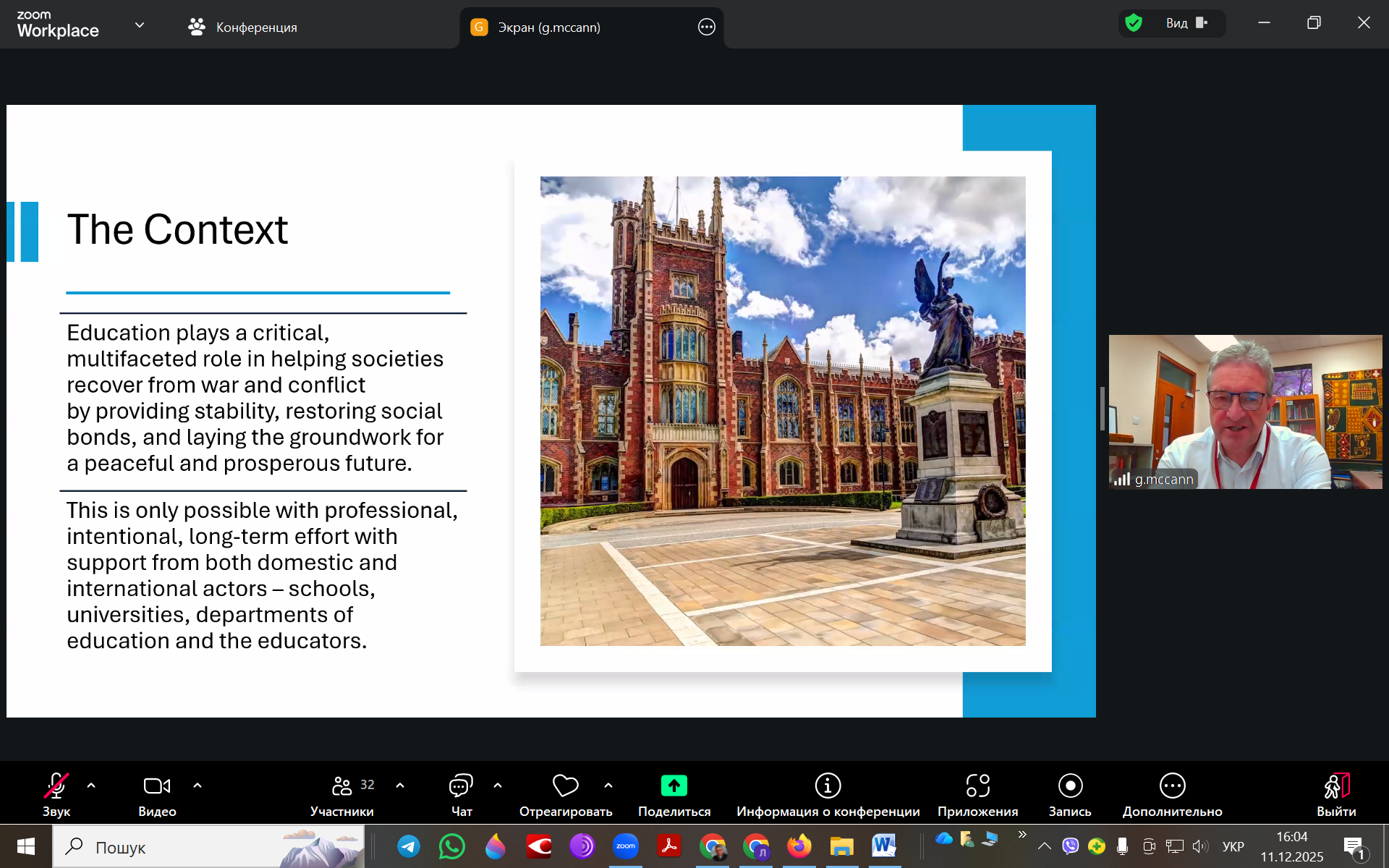
On December 11, postgraduate students and lecturers from the Department of Technological and Vocational Education participated in a public lecture by Professor Gerard McCann from Queen’s University (Belfast) on the topic “Education for Recovery”. The lecture focused on the multifaceted and strategically important role of education in supporting societies that have experienced war and conflict, as well as contributing to stabilization, restoring social ties and forming the foundations for peaceful and sustainable development.
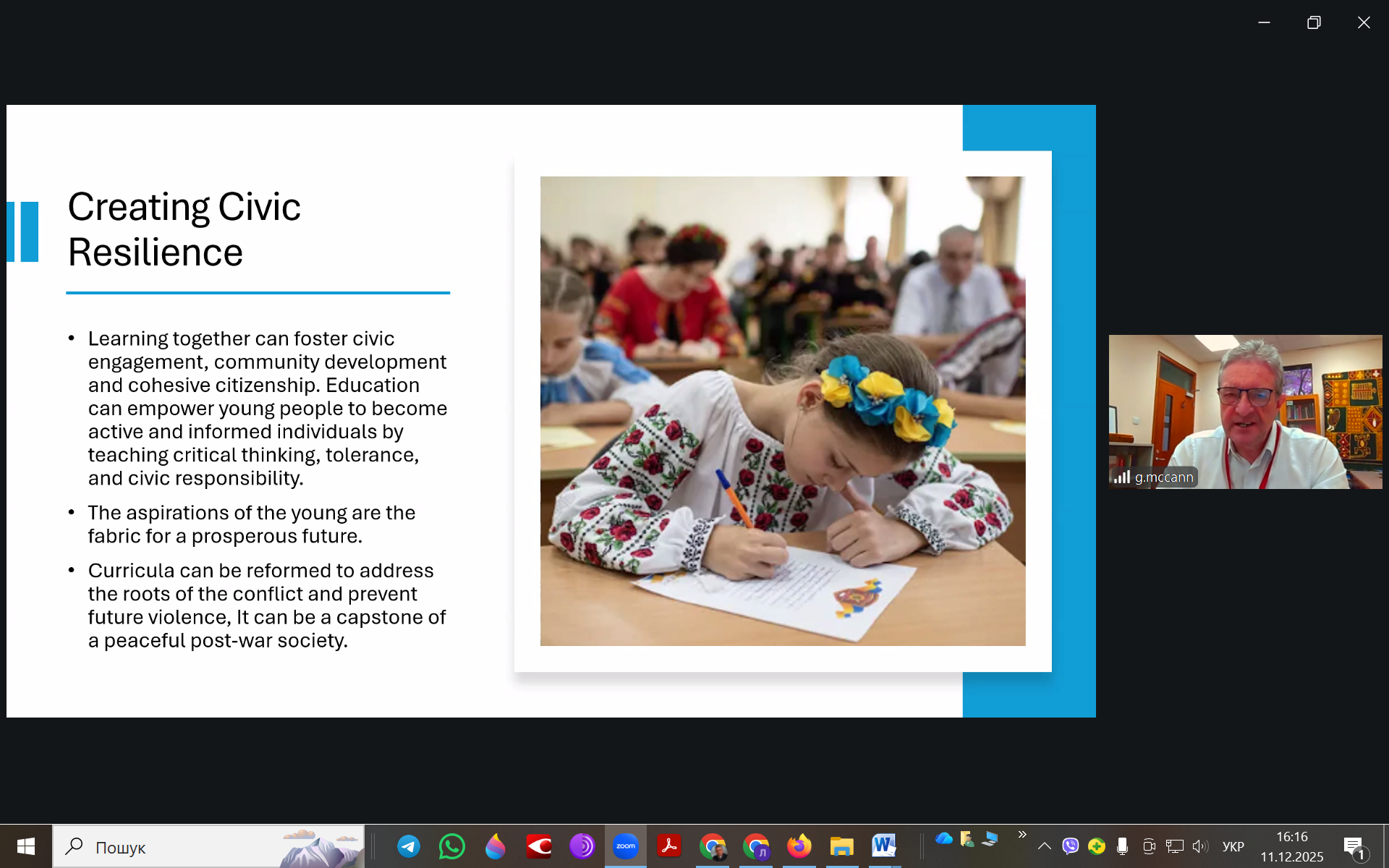
Professor McCann supported his theses with examples from his own experience, analyzing the functioning of education during the ethno-political conflict in Northern Ireland from the late 1960s until the signing of the Belfast Agreement in 1998. The lecturer emphasized that it is education that stimulates civic activity, community development, and citizen cohesion. It gives students the opportunity to become active and informed members of society, forms critical thinking, tolerance, and responsibility to the community.
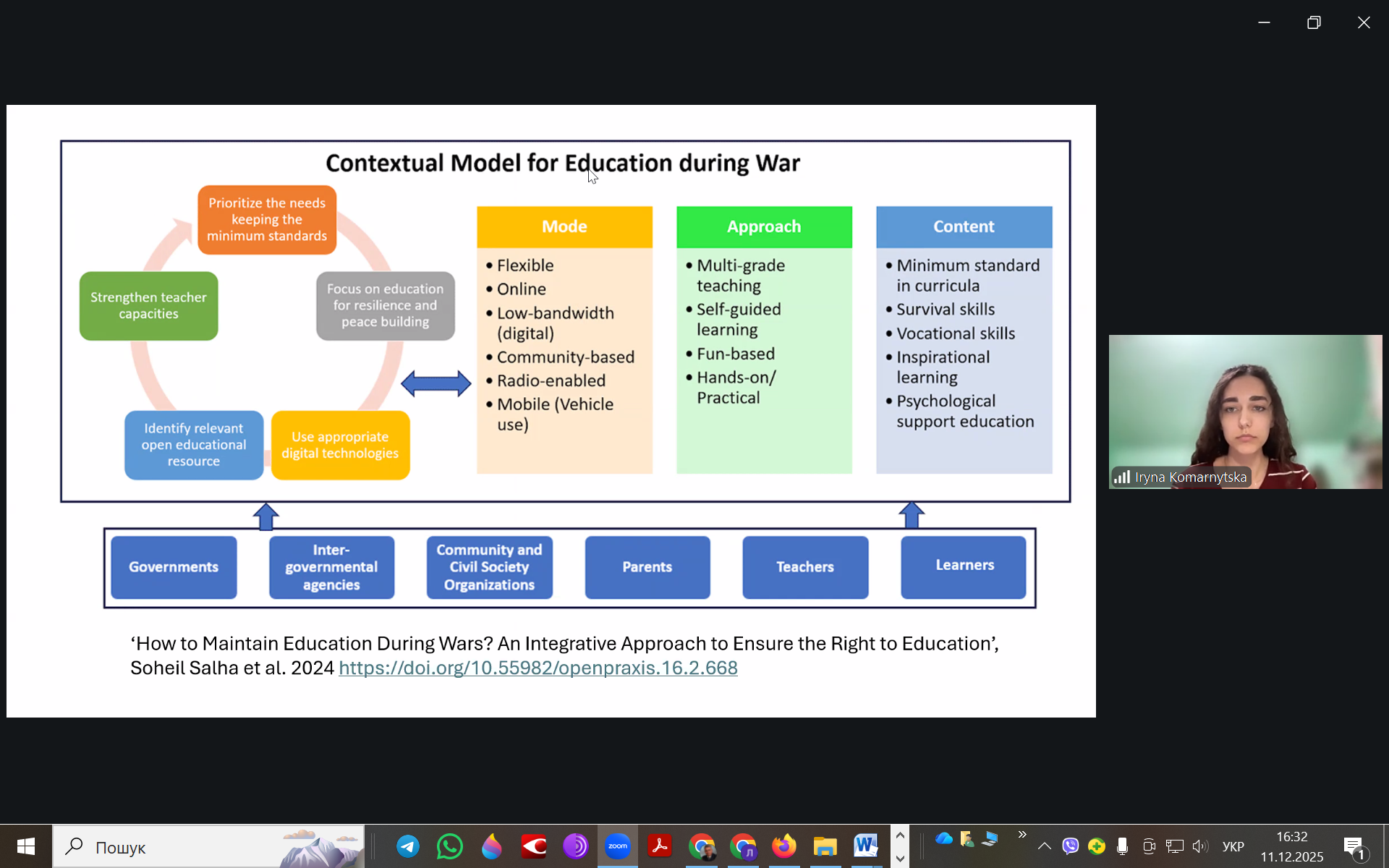
The professor paid special attention to the characteristics of the contextual model of education in wartime, which allows adapting curricula to crisis circumstances. He gave examples of the integration of psychological support, social learning, and project activities, which contributes not only to the acquisition of knowledge, but also to the restoration of a sense of security, social belonging, and confidence in students’ own abilities. The emphasis was on the development of leadership competencies, cooperation skills, and creative problem-solving in complex socio-political conditions.
Graduate students had the opportunity to discuss practical aspects of applying these approaches in the educational process, share their own experiences, and receive recommendations for the formation of educational programs that combine academic training with the development of social resilience and civic responsibility.
At the end, Professor McCann emphasized the importance of an interdisciplinary approach to education for recovery which integrates the humanities, social sciences, and natural sciences. He called on young scholars to actively implement innovative pedagogical practices that promote the development of critical thinking, empathy, and civic responsibility, while simultaneously forming the ability to effectively adapt to the dynamic changes and challenges of modern society.
For the graduate students the lecture became not only a source of new knowledge, but also a platform for professional exchange, expanding scientific contacts, and developing educational initiatives aimed at supporting peace and stability in society.
Roman Lepkyi, PhD student, Department of Technological and Vocational Education